As per the Recordent's "Indian SME Receivables Report 2026", an SME carries about Rs3.83 crore in receivables unsettled for over 360 days; Delayed MSME payments at roughly Rs8.1 lakh crore, represent over 4.6% of India's GVA

Mehul Dani
Mumbai, 1 September, 2026: Recordent is a technology-driven credit and collections management platform designed to help businesses, particularly MSMEs, manage their accounts receivable and improve cash flow. By offering comprehensive credit reports on buyers and an automated multi-channel follow-up system, Recordent enables businesses to make informed credit decisions, reduce their Days Sales Outstanding (DSO), and recover pending dues efficiently. The platform bridges the critical information gap in non-banking commercial transactions by providing actionable credit insights and fostering a culture of timely payments and financial discipline across India's B2B ecosystem.
Winny Patro is the Co-founder and CEO of Recordent. A seasoned entrepreneur and business strategist, he brings extensive experience in building scalable technology platforms and driving digital transformation. Prior to Recordent, he successfully led large-scale initiatives bridging technology and government ecosystems to foster innovation and business growth. At Recordent, his vision is to democratize credit management and build a secure, data-backed financial environment that enables MSMEs to scale without the burden of bad debts.
Winny Patro, Co-Founder and CEO of Recordent, speaks with FinTech BizNews Editor Mehul Dani about wide-ranging aspects relating to the platform's business model and technologies.
Mehul Dani: The MSME delayed-payment challenge in India has been growing. How serious is the challenge?
Winny Patro: The MSME delayed-payment problem in India is severe and systemic — over Rs 8.1 lakh crore (Trillion-TRN) is currently locked up in overdue receivables, and it's a challenge Recordent's own research has quantified in granular detail, positioning the company squarely at the center of the solution space. The latest Economic Survey and industry reports peg delayed MSME payments at roughly Rs8.1 lakh crore, moderating slightly from the Rs8.27 lakh crore in 2023 and the 2022 peak of Rs10.7 lakh crore, but still representing over 4.6% of India's GVA. Despite the legally mandated 45-day payment window, actual settlement stretches to 60-90 days or longer, and some estimates suggest this liquidity drag shaves 1-2% off GDP growth. Micro enterprises bear the brunt, facing payment delays up to three times longer than larger firms, with median debtor days historically running around 195 days beyond the legal limit.
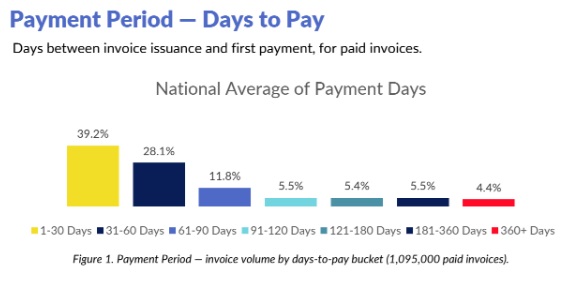
Recordent's "Indian SME Receivables Report 2026", based on data from roughly 110,000 MSMEs and over 1 million transactions, found that Indian SMEs take an average of 73 days to clear invoices against the 45-day legal mandate. On average, an SME carries about Rs3.83 crore in receivables unsettled for over 360 days, a striking figure given that 82.6% of invoices are issued with short credit terms of 0-30 days — proving the problem isn't generous credit policies but weak collections discipline behaviour. and buyer payment Recordent's earlier city-level survey in 2023 sharpened this picture: Hyderabad, Kolkata, Chennai, and Pune showed the worst behavior, with nearly 52% of payments overdue beyond 90 days, while Mumbai fared much better at 29%. Chennai, Pune, and Hyderabad also lagged badly on-time collection, at just 18-22% of receivables collected on schedule, versus 36-38% in Mumbai and Ahmedabad.
Why prevention may be more effective than dispute resolution?
Winny Patro: How to do it, ways to do it, may depend on size of the company. a. Prevention beats dispute resolution because it stops cash-flow damage before it happens — recovering money already stuck via Samadhaan or courts is slow, relationship damaging, and rarely full-value, whereas prevention protects both cash and the buyer relationship intact. Dispute resolution is inherently reactive and costly: MSMEs avoid the Samadhaan portal and legal recourse because pursuing a defaulting buyer often means losing that buyer altogether, and only a fraction of filed cases reaches actual settlement.
Fear of damaging business relationships discourages MSMEs from pursuing legal remedies even when eligible, per the latest Economic Survey, and only about 26% of disputed cases reach resolution or settlement. Even when resolution succeeds, the process ties up management time and legal cost, and the enterprise has already absorbed weeks or months of working-capital strain before any recovery materializes.
Prevention, by contrast, addresses the root cause — poor visibility into buyer risk and weak collection discipline — before an invoice ever goes overdue, which is precisely the gap Recordent's own data shows Indian MSMEs are not managing well (73-day average settlement vs the 45-day legal norm). i.
Core Prevention Levers:
1. Credit-check counterparties before extending terms: assessing a buyer's financial soundness and payment history upfront reduces exposure before the relationship even starts.quickbooks.
2. Set unambiguous payment terms in writing: due dates, accepted methods, late fees, and escalation triggers should sit in the contract and on every invoice, not just verbally agreed.
3. Invoice promptly and accurately: errors or delayed invoicing directly extend the payment cycle, so speed and compliance upstream matter as much as follow-up downstream.
4. Automate reminders and monitoring: real-time visibility into aging receivables lets a business flag risk within days rather than discovering a 90-day-overdue account by accident.
5. Offer flexible/digital payment options: payment links, QR codes, and installment options remove friction that otherwise causes "accidental" delays. 6. Incentivize early payment, penalize late payment: early-payment discounts paired with clearly stated interest for delays shift buyer behavior proactively. 7. Use staged or partial payments for large orders: milestone-based billing limits exposure on any single overdue invoice.
How can deployment of technology, data and automation lead to improvement in the payment behaviour of the companies?
Winny Patro: Technology and data turn payment management from reactive to predictive, cutting delays at the source.
Predictive analytics/AI scores buyers using historical payment data, flagging default risk before due dates so businesses act proactively, not after the fact. Automated Account Receivable systems generate invoices, send reminders, and reconcile payments instantly, cutting days sales outstanding — automated firms average 40 days vs 57 for manual ones. Real-time dashboards give continuous visibility into aging receivables and buyer behavior patterns, enabling early intervention on slipping accounts.
Machine learning detects subtle shifts in payment behaviour over time, letting collection strategies adapt dynamically rather than using one-size-fits-all follow-up. Automated payment workflows and digital rails reduce friction, errors, and approval bottlenecks that often cause unintentional delays.
How to build a culture of credit transparency and financial discipline? How can it help companies and the economy in the long term?
Winny Patro: Building this culture starts with formalisation and habit, not just policy.
Formalise records: GST filing, Udyam registration, and accurate books give lenders and buyers visibility into real business health.
Standardize credit terms and enforce them: treat late payments as a crisis, not routine, and apply consistent terms across all buyers.
Share payment data transparently: participating in credit bureaus/reporting systems (like TReDS, Recordent) reduces information asymmetry between MSMEs, lenders, and buyers.
Embed financial thinking beyond finance teams: sales, procurement, and operations should weigh cash-flow impact in daily decisions, not just the CFO. Track performance continuously: dashboards and periodic reviews catch slippage early and create accountability.
How do you view the future of receivables management shaping up in India's digital economy at a scale & effectively?
Winny Patro: Receivables management in India is shifting from reactive collections to predictive, ecosystem-integrated infrastructure, driven by scale and mandatory digitization.
Regulatory push: GST e-invoicing and TReDS expansion are mandating digital AR adoption, not just incentivizing it.
Predictive over reactive: ML-driven risk segmentation now updates buyer credit scores dynamically, flagging default risk before invoices become due, rather than chasing overdue accounts. ERP-integrated, single source of truth: Real time data flow between sales, finance, and collections is becoming the norm, replacing fragmented spreadsheets.
Agentic AI collections: Autonomous, multi-channel (WhatsApp/SMS/voice) systems are already cutting collection costs 60-70% for early adopters.
What are the technologies and tools deployed by your company? How these techs have benefited in reducing costs and increasing efficiency and transparency in collections, recovery, etc?
Winny Patro: We build our technology in-house. a. Leveraging a modern cloud-native technology stack: Our credit risk and collections platform, leverages a modern cloud-native technology stack comprising Angular, Node.js, NestJS microservices, MySQL, and Microsoft Azure. The platform integrates with ERP systems, GST validation services, credit bureaus, and multiple communication channels such as SMS, Email, WhatsApp, IVR, and AI powered voice calling to automate receivables management and collections. We also use Artificial Intelligence (AI) across both our engineering processes and product capabilities.
b. AI in Software Development: GitHub Copilot, Cursor, and Claude are used to accelerate assisting architectural software development by with code generation, recommendations, code reviews, debugging, documentation, and test case creation. This has improved developer productivity, code quality, and reduced development time.
c. AI in the Product: Our collections platform integrates AI-powered voice calling to automate payment reminder calls. Unlike traditional IVR, AI can engage customers in natural conversations, capture their responses and payment commitments, identify reasons for delayed payments, analyze customer intent and sentiment, and automatically categorize call outcomes. The captured insights are then made available to collection teams for follow-up actions and reporting.
d. Business Benefits:
• Reduced operational costs by automating customer outreach and minimizing manual collection efforts.
• Increased collection efficiency through AI driven voice interactions, automated reminders, and intelligent follow-up workflows.
• Faster recovery by capturing customer payment commitments and identifying cases requiring escalation. Enhanced transparency through centralized dashboards, complete interaction history, AI analyzed call outcomes, and audit trails. Improved risk assessment using GST validation and credit bureau integrations. Faster software delivery and improved product quality through AI-assisted development practices. Scalable and secure cloud infrastructure on Microsoft Azure, enabling reliable and efficient operations.
What is the estimated amount that can be obtained earlier or saved for MSMEs through your platform?
Winny Patro: On average, Indian SMEs spend nearly Rs4 lakh each year managing collections manually—drawing on the time and effort of accountants, sales teams, and even directors. When factoring in the value of directors’ time, this cost can rise to Rs10 lakh annually. With Recordent’s automation platform, businesses have consistently saved between Rs2 lakh and Rs8 lakh per year by eliminating manual tasks. Beyond direct savings, companies have significantly accelerated their receivables cycles—some improving by 40%.
For example, reducing a 75-day payment period to 45 days translates into a 1% gain on funds received, assuming a 12% average interest rate. In certain cases, businesses have unlocked as much as Rs10 lakh in value per receivable cycle.
Do you feel the need for more regulatory provisions/ govt measures to be applied to large corporates with respect to timely, sufficient payments by them to MSMEs?
Winny Patro: a. The recent bill passed in Parliament mandating CPSEs to use the TReDS platform for invoice settlement is a pathbreaking reform. This is a major win for MSMEs. MSMEs struggle to get payments from PSUs yet they can't refuse to supply material because of promising order sizes (volume security), fear of blacklisting (also GeM ratings too) and collateral financing against PSU orders.
b. MSME Samadhaan, 45-day payment mandates, and Section 43B(h) have failed to fix the PSU delayed-payment problem. Policy exists on paper, but systemic delays and structural loopholes keep small suppliers waiting for their payments. c. Anticipating huge relief to 1000s of MSMEs who supply to CPSEs.
