The report evaluates states across nine key economic and governance parameters to create an investment-readiness ranking

FinTech BizNews Service
Mumbai, 19 May 2026: Client Associates (CA), India’s leading multi-family office managing over $7 billion in assets for more than 1,100 HNIs and Ultra HNIs, today released its white paper titled “State of Indian States: 2026”, offering one of the most comprehensive multi-dimensional economic analyses of 30 Indian states.
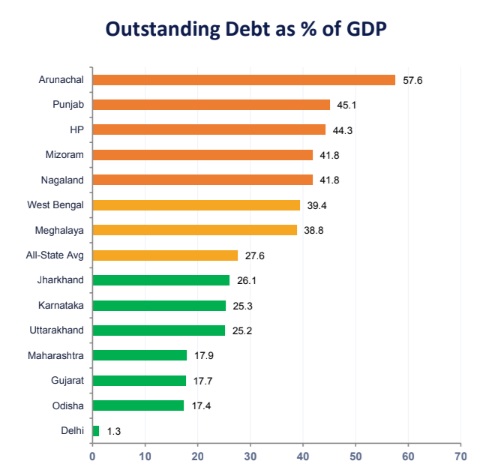
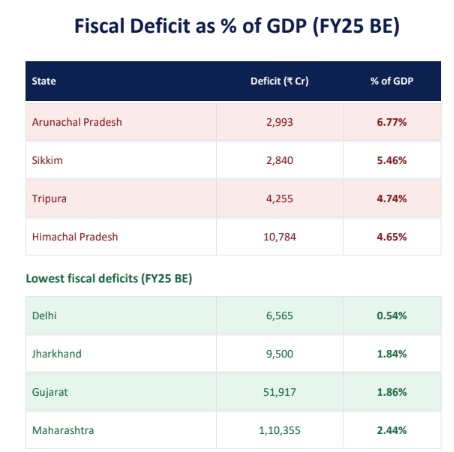
The report evaluates states across nine key economic and governance parameters — GDP size and growth, per capita income, inflation, fiscal deficit, debt sustainability, FDI inflows, employment, ease of doing business and sectoral composition — to create an investment-readiness ranking.
Key Findings from “State of Indian States: 2026”
India’s Macroeconomic Context
India continues to remain the world’s fastest-growing major economy, with GDP growth projected at 7.5% in FY2026 and 6.8% in FY2027. However, the report highlights widening disparities in income, fiscal stability, employment and economic growth across states. Maharashtra’s economy is 133 times larger than Mizoram’s, while Goa’s per capita income exceeds Bihar’s by more than 8x.
State GDP: India’s Economic Engines
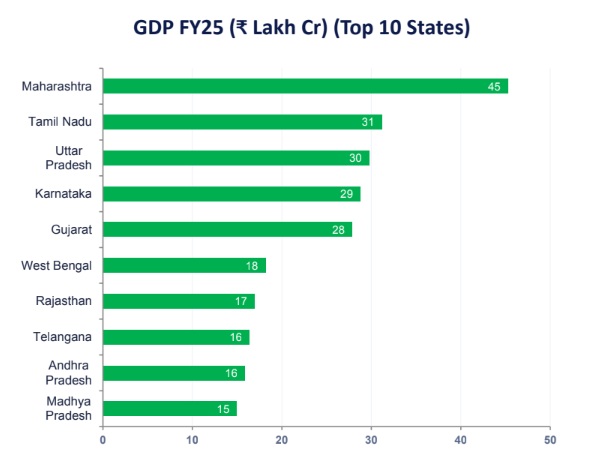
The report highlights that India’s economic activity remains heavily concentrated. Maharashtra, Tamil Nadu, Uttar Pradesh, Karnataka and Gujarat together contributed nearly 48% of India’s GDP in FY2025, while the bottom ten states accounted for less than 3%.
The Whitepaper Highlights
Maharashtra alone contributed 13.3% to national GDP, reinforcing its position as India’s financial and commercial capital. Tamil Nadu recorded the highest year-on-year growth among the top five states at 16% in FY25, while Uttar Pradesh posted a 5-year CAGR of 15.3%, making it one of India’s most closely watched economic transformations.
Commenting on Whitepaper Rohit Sarin, Co-Founder, Client Associates, said,“India’s growth story remains concentrated among a handful of states, with a few economies growing at over 10% while others continue to pull the national growth rate closer to 7%. The real opportunity lies in expanding economic momentum beyond the top growth states. If more states accelerate reforms, India has the potential to move towards double-digit growth. Achieving this will require stronger private sector participation, sustained capex, and deeper reforms to attract larger global capital flows.”
Nitin Aggarwal, Director – Investment Research and Advisory at Client Associates, further added: “India’s next phase of economic growth will increasingly be shaped at the state level. The study highlights that economic leadership in India is no longer defined only by size, but also by fiscal discipline, institutional quality, capital efficiency and the ability to attract private investment. While some states continue to dominate GDP contribution and investment inflows, emerging states are improving competitiveness through reforms, infrastructure development and governance improvements. At the same time, widening disparities in income and fiscal sustainability remain key challenges India must address over the coming decade.”
Per Capita Income: The Prosperity Divide
The report notes that economic size does not necessarily translate into individual prosperity. Sikkim, Goa and Delhi recorded the highest per capita incomes, while Bihar remained at the bottom with Rs69,321. The national average stands at Rs2.58 lakh, with only 16 states exceeding this figure. Uttar Pradesh and Bihar, despite accounting for over 27% of India’s population, continue to remain heavily concentrated in the poverty headcount.
FDI Inflows: Highly Concentrated with Emerging Diversification
India attracted Rs4.22 lakh crore in FDI equity inflows in FY2025, a 14.7% year-on-year increase. However, five states — Maharashtra, Karnataka, Gujarat, Delhi and Tamil Nadu — accounted for 83.3% of total inflows.
Tamil Nadu and Haryana emerged as fast-rising FDI destinations, while Uttar Pradesh and Rajasthan are increasingly becoming investment hubs driven by policy reforms and infrastructure development.
Composite Economic Competitiveness Rankings
The white paper’s composite ranking combines all nine economic and governance dimensions into a single investment-readiness score. Gujarat emerged as the top-ranked state due to strong performance in employment generation, FDI attractiveness and fiscal discipline, followed by Karnataka, Maharashtra, Jharkhand and Uttar Pradesh.
Four-Tier Investment Framework
The report categorises Indian states into four broad investment tiers:
