2 Ways To Reduce AI Risk
3 Ways To Get Value From AI; Gartner Predicts 60% of Organizations That Ignore Data Governance Culture Challenges Will Fail to Govern AI Successfully by 2027
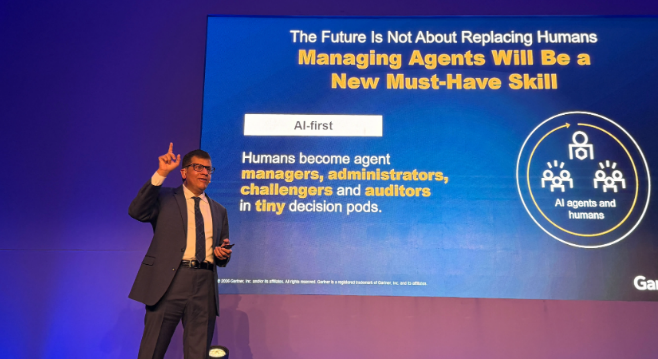 Deepak Seth, Sr Director Analyst, Gartner
FinTech BizNews Service
Mumbai, 21 September, 2026: The Gartner Data & Analytics Summit, taking place in Mumbai today and tomorrow, started on a very encouraging note.
Key Announcements
- Gartner Predicts 60% of Organizations That Ignore Data Governance Culture Challenges Will Fail to Govern AI Successfully by 2027
- Gartner Opening Keynote: Navigate AI on Your Data & Analytics Journey to Value
Presented by Robert Thanaraj, Sr Director Analyst, Gartner, and Gareth Herschel, VP Analyst, Gartner
AI is accelerating new possibilities for data and analytics. Robert Thanaraj, Sr Director Analyst, and Gareth Herschel, VP Analyst at Gartner, discussed how a thoughtful approach to speed, direction and managing uncertainties help D&A leaders derive value from AI.


Key Takeaways
- “In 2025, the odds of an AI initiative achieving a return on investment (ROI) were only one in five.”
- “The most common ROI roadblocks include a lack of understanding of costs, an inability to scale effectively, and insufficient data quality. Without these strong foundations, AI will remain what it is for most organizations today: a costly experiment.”
- Value is often measured using ROI, which D&A leaders need to think of as more than just a financial measure. There are three ways to derive value from AI:
- Set AI ambition, providing a return on intelligence.
- Strengthen AI foundations to achieve a return on integrity.
- Empower people for AI transformation, contributing to a return on individuals.
- “There are two ways to reduce AI risk. First, organizations can prevent the exposure of inappropriate data to AI systems or LLMs through AI governance. Second, they can reduce inaccuracies, misunderstandings and hallucinations with a well-designed context layer. These initial steps help ensure that data is AI-ready, trusted and aligned with intended use cases.”
- Signature Series: Get Ready for Data and Analytics 2030
Presented by Deepak Seth, Sr Director Analyst, Gartner
Data and analytics (D&A) leaders play a central role in their organization’s AI success by providing the critical accelerants needed to realize value from AI. In this session, Deepak Seth, Sr Director Analyst at Gartner, highlighted three shifts D&A leaders need to make to sustain AI value.


Key Takeaways
- “Chief data and analytics officers (CDAOs) and other D&A leaders play a critical role in AI success or risk failure.”
- “Through 2030, responding to this imperative will require shifts in how the D&A team organizes and works, builds and scales and creates value.”
- Shift #1: Create Value Compounding through Agentic Transformation
- “Become an AI‑first D&A organization. This starts with an explicit AI ambition — one that uses AI to transform, not simply optimize, business and operating models.”
- Shift #2: Treat Context as Critical Infrastructure
- “Evolve your data foundation with context as critical infrastructure so AI agents operate with trusted situational awareness. D&A success is not about better models — it is about giving agents governed, contextual access to the right data.”
- Shift #3: Establish Trust as Catalyst of Value and Innovation
- “Without trust in the data, outputs and decisions of AI models and agents, there is no value from AI.”
- Practical Data Governance in 7 Easy Steps
Presented by Anurag Raj, Director Analyst, Gartner
There are key reasons why organizations struggle with effective data governance. In this session, Anurag Raj, Director Analyst at Gartner, examined what consistently goes wrong and shared seven practical recommendations to help organizations make data governance programs more effective, sustainable, and business outcome-driven.


Key Takeaways
- AI has significantly amplified the importance of getting data governance foundations right.
- The seven key actions for strengthening data governance include:
- Know your WHY. “Start with clear business outcomes and priorities”
- Deliver incremental value. “Focus on achieving measurable business value step by step.”
- Rebrand governance as a team sport. “Make governance a shared business and IT responsibility.”
- Embed governance and culture into business workstreams. “Make governance part of everyday operations.”
- Focus on governance meeting agendas. “Keep governance meetings targeted and outcome oriented.”
- Build on existing processes. “Formalize and strengthen work already being done.”
- Value contributions by celebrating wins. “Recognize impact and celebrate data stewardship efforts.”
