Scale Is Not Inclusion, Widen Meaningful Participation In Markets: Pandey
FinTech BizNews Service
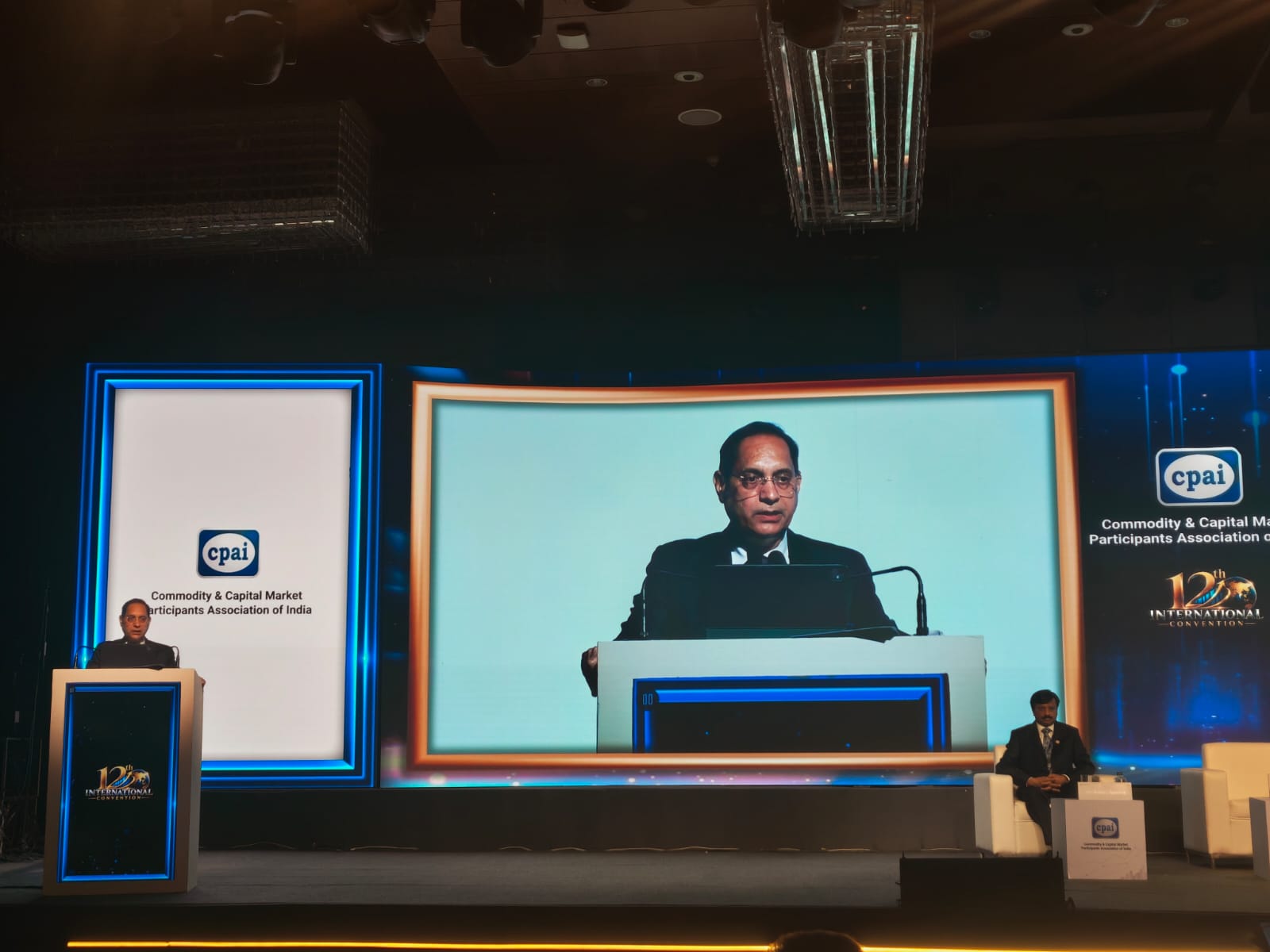
Mumbai, 03 October, 2026: Shri Tuhin Kanta Pandey, Chairman, SEBI addressed the 12th Convention of CPAI on the theme of“Capital & Commodity Markets for All: Driving Inclusive Growth & National Prosperity” in New Delhi, on October 3, 2026
Following is the complete text of his speech:
ShriK. Rajaraman,Chairperson,IFSCA,Shri Kamlesh Varshney, WTM, SEBI, Mr. Ashishkumar Chauhan, MD&CEO, NSE, Ms. Praveena Rai,MD&CEO, MCX, Ms. Latika Kundu MD&CEO, MSEI, Mr.AshokAgarwal,ChiefMentor,CPAI,Mr. Rajeev Agarwal, National President, CPAI,members of CPAI, distinguished guests, market participants, ladies and gentlemen. Good morning!I am delighted to be with you at the 12thConvention of CPAI. The theme today is timely-“Capital & Commodity Markets for All: Driving Inclusive Growth & National Prosperity.”For an economy to grow, it needs capital. But for that growth to endure, it also needs the ability to manage risk.Our capital markets do both. They channel savings into productive investment and provide instruments for managing financial risk. Commodity derivatives add another dimension by helping farmers, producers and enterprisesmanage price risk.Capital creates opportunity. Effective risk management makes that opportunity more resilient. India’s next phase of growth needs both.
Snapshot of our Markets
Let us first look at where we stand. Average growth in India’s real GDP in the last three financial years has been 7.4%1.India’s capital markets have expanded substantially in scale and reach. Over the last decade, Indian companies have raised, on average, around Rs10 lakh crore annually through equity and debt. Our unique investor base has more than tripled to around 15 crore. Mutual fund assets are around Rs87 lakh crore, while outstanding corporate bonds are around Rs61 lakh crore.The commodity derivatives market is also expanding rapidly. In FY 2025-26, aggregate turnover in futures and options, on a notional basis, was around Rs1,388 lakh crore. Bullion was the largest segment, accounting for about 59% of notional turnover. In the first six months of FY 2026-27, turnover has already reached about Rs1,538 lakh crore-11% more than in the whole of the previous financial year. Scale is not inclusion. Our next challenge is to widen meaningful participation. And in commodity derivatives, success must be measured not by turnover alone, but by how effectively these markets help manage risk.For instance, in late 2025, the World Bank expected commodity prices to decline by around 7% in 2026. By April 2026, following severe disruptions to commodity trade, it projected prices to rise by 16%, with energy prices rising by 24%.
Reforms Journey-Broader Capital Markets
Our regulatory approach has been guided by a simple principle-make markets easier to access and operate in, while preserving investor protection and market integrity.In the primary market, we have reintroduced open-market buy-backs through stock exchanges with a simpler process. We have madeIPO disclosures easier for retail investors through a concise and standardizedabridged prospectus at the DRHP stage.The same developmental approach extends to corporate bonds, REITs and InvITs. We have widened the investor base, introduced greater flexibility and taken measures to deepen the bond-distribution ecosystem.We have also eased access for foreign investors. SWAGAT-FI provides a streamlined pathway for objectively identified low-risk FPIs. Netting of funds has been permitted for FPI transactions, while re-KYC requirements for NRIs have been eased.Across asset management, we have simplified and modernizedregulatory frameworks. Mutual fund regulations have been comprehensively revamped. The PMS framework has been consolidated while providing greater investment flexibility. We have also approved a framework to support global fund-management activity from India. For AIFs, GARUDA has sharply reduced scheme-launch timelines, with greater flexibility for funds catering to sophisticated investors.Our supervisory approach is becoming more risk-based. Routine and repetitive inspections of compliant entities are being reduced, while greater attention is directed towards higher-risk entities and areas. The penalty framework for stock brokers has been made more proportionate and predictable. Common compliance reporting will reduce duplication for brokers and clearing members.Technology too must come with accountability. Where regulated entities use AI or machine-learning tools, responsibility for investor-data protection and for the outputs of those systems continues to rest with the regulated entity.
Commodity Derivatives
The same philosophy applies to commodity derivatives, but the context is different. These markets are closely linked to the physical economy -to farmers, producers, processors, manufacturers and commercial users. Commodity derivatives cannot remove such uncertainty, but they can help manage its financial consequences. They provide a forward price signal, greater visibility over costs and a transparent reference price.Our reforms therefore seek to make participation easier, deepen hedging, strengthen price discovery and preserve the integrity of the physical market. We have reduced avoidable friction. The benefit of early pay-in has been extended from futures to options, and position-limit provisions for agricultural commodities have been reviewed.
We have also widened the range of risks these markets can help manage. Electricity futures provide generators, DISCOMs and industrial consumers with a regulated mechanism to manage power-price risk. Weather derivatives extend this approach to financial risks linked to objective meteorological data.As the market develops, its supporting infrastructure must keep pace. We have revamped the Vault Managers Regulations to strengthen the infrastructure and oversight supporting the bullion market.We have also broadened institutional participation. We have also broadened institutional participation. WiderFPI access to indices and physically settled non-agricultural contracts can add liquidity and strengthen price discovery, while position limits and delivery safeguards protect the physical market.And growth must always be matched by resilience. We have reviewed Settlement Guarantee Fund requirementsandmoved stress testing towards historical scenarios that better reflect commodity-price behaviour.
Way Ahead
Where should we go next? First, participation must become easier for genuine market users. We are examining position limits for non-agricultural contracts with the objective of improving liquidity and depth without weakening risk controls.Second, market design must allow contracts to gain scale. In some agricultural commodities, physical settlement from the outset can impede market development. A phased approach can allow the contract to mature before physical settlement becomes mandatory.Consultation has been completed withguidelines to follow.Third, we must keep reducing structural friction. We will continue our engagement on GST-related issues affecting participants who give or receive commodities through exchange platforms.Fourth, technology must serve the character of commodity markets. These marketsinclude producers, commercial users, farmers, processors and physical hedgers. Technology can improve access and efficiency, but its design must reflect their needs while preserving fair access and market integrity.Fifth, inclusionmust be supported by knowledge. Under Project Jagrook, we will strengthen awareness regarding commodity derivatives among farmers, FPOs, MSMEs, hedgers and other market users. Participants must understand both the utility and the risks of these products, because access without understanding is not inclusion.Alongside these measures, we are continuing to strengthen the broader market structure. After introducing the Closing Auction Session, we are examining concerns relating to the settlement-price framework for derivatives on expiry days. We also want deeper and more liquid cash markets. Wider participation, stronger securities borrowing and lending, and efficient hedging and
arbitrage can improve price discovery and strengthen the interaction between cash and derivatives markets.These reforms also place greater responsibility on market participants. Simpler regulation cannot mean weaker compliance. Robust controls over client funds, margins, reporting and supervision remain fundamental. Members must ensure that trust and market integrity are never compromised.Concluding RemarksLet me end where I began. India needs markets that can mobilizecapital, manage risk and inspire trust.“Markets for all” should mean that households can invest with confidence, enterprises can raise capital to grow, businesses can manage riskand intermediaries uphold high standards of conduct.Ultimately, the success of our markets will be measured by how effectively they convert savings into investment, and investment into inclusive growth.
Thank you. Jai Hind!
