The continued contribution of the BRICS Think Tank Network for Finance is welcome under India’s Chairship in leveraging fintech for inclusive development and financing resilient infrastructure.
FinTech BizNews Service
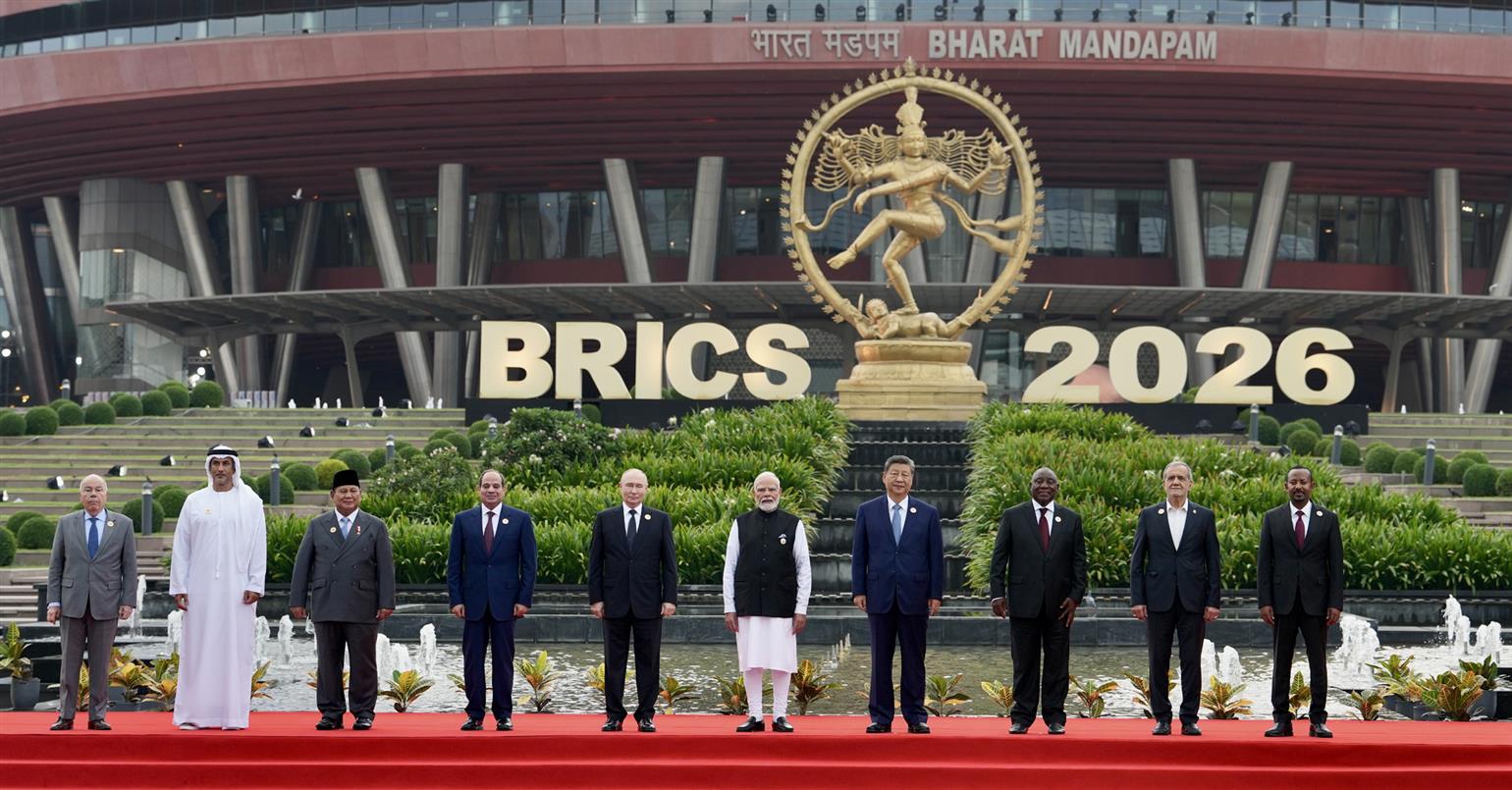
Mumbai, 13 September, 2026: The Leaders of BRICS countries, met in New Delhi, India, from 12 to 13 September 2026 for the XVIII BRICS Summit held under the theme: “Building for Resilience, Innovation, Cooperation and Sustainability”.
Prime Minister’s Opening Remarks during the 18th BRICS Summit Session
Your Highness,
Excellencies,
Namaskar!
I extend a warm welcome to all of you to the extended family of BRICS.
Today, this hall brings together continents, cultures, and diverse development journeys. It is a testament to the growing strength, appeal, and unprecedented trust in BRICS.
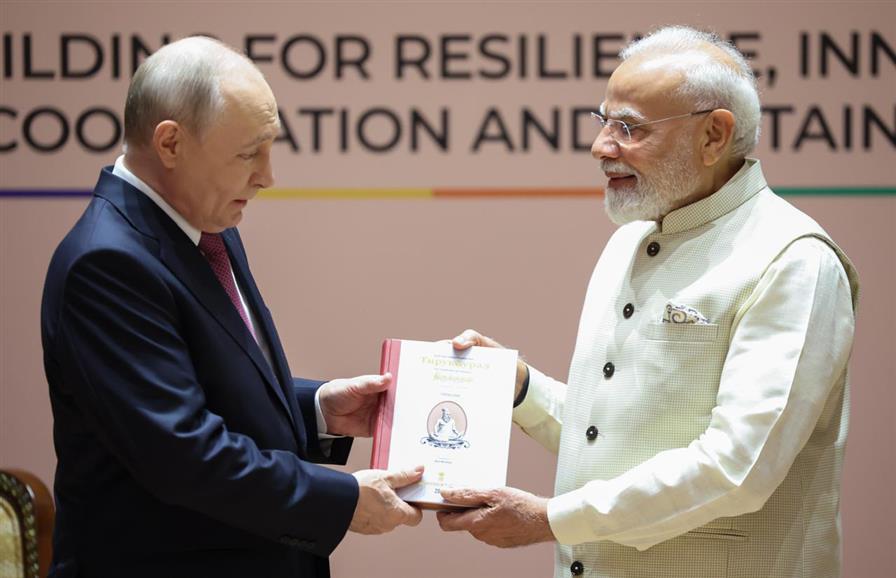
PM meeting with the President of Russia, Mr. Vladimir Putin on the sidelines of the 18th BRICS Summit, in New Delhi
Friends,
Under India’s Presidency, we have focused all our efforts on these four pillars: Resilience, Innovation, Cooperation, and Sustainability. I am pleased that, with all your cooperation and support, we have been able to translate our shared vision into win-win cooperation.
Today, the number of conflicts and tensions in the world is continuously increasing, and this is having an increasingly negative and far-reaching impact on the lives of ordinary people.
Pandemics, climate disasters, and supply-chain disruptions have shown that in today’s interconnected world, no crisis remains confined to a single region. Therefore, within the BRICS group, we have placed special emphasis on strengthening Resilience. It is equally important to identify challenges in time, be prepared for them, and take prompt action.
With this approach, we have agreed on a BRICS Integrated Early Warning System for the prevention of and response to infectious diseases. Early Warning Data Integration Guidelines have been prepared for disaster management. The BRICS Logistics Supply Chain Cooperation Framework will help make our supply chains more reliable and resilient.
Friends,
Under Innovation, the BRICS Incubator Network will connect our start-ups and incubators with one another. To promote innovative and scalable solutions, we have proposed the BRICS Startup Innovation Fund.
The BRICS Network on Digital Agriculture will create new opportunities for farmers. Through this initiative, AI, geospatial technology, and Digital Public Infrastructure will be connected to the real needs of farmers.
The weaponization of technology and critical minerals can hinder our shared progress. Therefore, we have emphasised inclusivity in the adoption of technology.
Friends,
India has advanced friendship, partnership, and cooperation through the BRICS platform.
Our endeavour has been to ensure that BRICS cooperation does not remain limited to governments alone. We have sought to make our entrepreneurs, farmers, researchers, women, youth, and ordinary citizens active participants in it.
Through BRICS CONNECT, we have promoted skills, employability, women in the workforce, social security, and capacity building.
To connect small enterprises with knowledge, finance, and new markets, we have initiated the BRICS MSME Cooperation Portal.
The BRICS Urban Mobility Hub has been established to facilitate the sharing of best practices among our cities.
Friends,
In Indian civilisation, nature has been accorded the status of a mother. For centuries, we have believed that development and the environment are not alternatives to each other, but are complementary. Within BRICS as well, we have emphasised the need to strike a balance between human development and the environment.
This is the foundation of Sustainability. It is also our responsibility towards future generations. In this direction, we have made progress on several fronts.
For Smart Grids and Energy Storage, we have established the BRICS Digital Centre of Excellence. This will help make our clean energy systems more reliable, efficient, and accessible.
The Centres of Excellence for Agro-Ecology and Regenerative Agriculture will connect traditional knowledge with modern science. The principles developed for community-based climate adaptation will make indigenous knowledge an important foundation for climate action.
Friends,
Building on these four pillars, through BRICS we have sought to promote inclusive global growth. We believe that the benefits of solutions developed within BRICS should not remain confined to BRICS alone. They should be made adaptable and accessible to meet the needs of the Global South.
Friends,
From my personal experience, I can say that the Global South countries’ confidence in BRICS has grown, because within BRICS:
Their voices are heard.
Their experiences are respected.
And solutions are developed not for them, but together with them.
The strength of BRICS lies in our diversity and cooperation.
We may be rooted in different realities, but together, we rise through cooperation, and blossom for humanity.
May our diversity remain our identity, our cooperation become our inspiration, and our progress serve the cause of all humanity.
Thank you very much.
Select Excerpts of BRICS New Delhi Declaration are as follows:
We, the Leaders of BRICS countries, met in New Delhi, India, from 12 to 13 September 2026 for the XVIII BRICS Summit held under the theme: “Building for Resilience, Innovation, Cooperation and Sustainability”.
We commend India for hosting the Outreach/BRICS Plus Dialogue segment of the 18th BRICS Summit, which injects new impetus to strengthen international cooperation and solidarity.
We reaffirm the BRICS Rio de Janeiro Vision for IMF Quota and Governance Reform and the need for a strong, quota-based and adequately resourced IMF at the centre of the global financial safety net to effectively support its members, particularly the most vulnerable countries. We urge entry into effect of the quota increases agreed under the 16th General Review of Quotas (GRQ) with no further delay and call for the development of approaches to meaningful quota realignment under the 17th GRQ at the earliest. We welcome the Diriyah Guiding Principles for Quota and Governance Reforms and reiterate that quota realignment should reflect countries’ relative positions in the global economy, increase the quota and voting shares of EMDEs and should not come at the expense of developing countries, while ensuring that a new, simple, and transparent quota formula protects the quota shares of the poorest members and guides but does not constrain access to Fund resources. We also believe that any voluntary financial contributions should not influence quota allocation, governance representation and voting power. In line with the BRICS Rio de Janeiro Vision for IMF Quota and Governance Reform, we stand ready to engage constructively with other IMF members to guarantee that meaningful quota share realignment and governance reforms are included in the 17th GRQ.
19. We reaffirm that the 2025 World Bank Shareholding Review is a critical tool to strengthen multilateralism and enhance the legitimacy of the World Bank Group, as a better, bigger, and more effective development finance institution. In line with the Lima Principles, we reaffirm that BRICS countries should continue to advocate for the increased voice and representation of developing countries, underpinned by a shareholding realignment that corrects their historic underrepresentation.
Recalling the 2026 Statement on Preserving and Revitalizing the Multilateral Trading System and 2025 BRICS Declaration on World Trade Organization Reform and Strengthening of the Multilateral Trading System, we reaffirm our unwavering support for reform of the World Trade Organization (WTO) and to strengthening a non-discriminatory, open, equitable, transparent, fair, inclusive, predictable and rules-based multilateral trading system, with the WTO at its core, while upholding the foundational principles, such as Most-Favoured-Nation Treatment and Special and Differential Treatment for developing members, particularly LDCs. We remain committed to active engagement in multilateral negotiations in Geneva, especially in the debates regarding the reform of the WTO. We will advance efforts and enhance coordination under the BRICS Informal Consultative Framework on the challenges undermining the effectiveness and credibility of the WTO and solutions to these challenges. We will ensure the implementation of the MC14 outcomes and continue to engage constructively towards the resolution of outstanding issues. We will engage constructively in the WTO reform to enhance the WTO’s authority, effectiveness, inclusiveness, and relevance, and build an open world economy. In this regard, we recognise that it is important to identify appropriate pathways for plurilateral initiatives into the WTO legal framework including on development-oriented issues, and to explore the formulation of forward-looking rules in the WTO. We strongly advocate for the immediate restoration of an accessible, effective, fully functioning, two-tier binding WTO dispute settlement mechanism as a foundation for trust and predictability for all WTO members, and the appointment of new Appellate Body members without further delay. We look forward to working towards strengthening the organization through the necessary reform while upholding the foundational principles of the WTO and facilitating the negotiation process within the WTO framework, and to restoring the credibility of the multilateral trading system. Echoing the aspirations of the Global South to fully integrate into the multilateral trading system, we strongly support Ethiopia and Iran’s bid for accession to the WTO. We acknowledge China for expanding its zero-tariff treatment to cover 53 African countries with which it has diplomatic ties.
We note that the multilateral trading system has long been at a crossroads. The proliferation of trade-restrictive actions that are inconsistent with WTO rules, whether in the form of indiscriminate rising of tariffs and non-tariff measures, or protectionism under the guise of environmental objectives, threatens to further reduce global trade, disrupt global supply chains, and introduce uncertainty into international economic and trade activities, potentially exacerbating existing economic disparities and negatively affecting prospects for global economic development. We voice serious concerns about the rise of unilateral tariff and non-tariff measures which distort trade and are inconsistent with WTO rules. We will work together to enhance the WTO’s responsiveness to trade disruptions and the needs and priorities of emerging markets and developing economies (EMDEs), as well as advance discussions on outstanding issues, and support balanced, inclusive and concrete outcomes that strengthen the multilateral trading system and enable it to better address evolving global challenges.
We express deep concern over the continued escalation of tensions in Middle East/West Asia and, recalling our respective national positions, call for exercising maximum restraint, as well as avoiding actions that could further aggravate the situation.
We express our concerns about illicit financial flows including, financing of terrorism, trafficking of firearms, trafficking in persons, the laundering of drug related crimes proceeds, use of ICTs for criminal purposes illegal virtual asset flows, corruption and related illicit activities, money laundering, financial fraud through organized crimes and circumvention of domestic regulatory frameworks that have adverse impact on economic stability, sustainable development and the integrity of the international financial system and organized crime. We also express concern about financing of terrorism. We recognize that these activities, including the illicit use of virtual assets and violations of domestic regulatory frameworks, may adversely affect economic stability, sustainable development and the integrity of the international financial system. We express serious concerns over the proliferation of organized scam networks, including cross-border fraud operations and so-called scam compounds, which exploit digital technologies, payment systems and individuals in vulnerable situations. We underline the importance of coordinated international action to dismantle these illegal networks, trace and recover criminal proceeds, protect victims, and prevent the misuse of financial institutions and emerging payment methods for large-scale fraud. We further stress the need to enhance cross-border cooperation among customs authorities, financial intelligence units, law enforcement agencies, tax authorities and supervisory bodies, including through relevant existing BRICS Working Groups and based on the documents adopted in BRICS, as well as the relevant international legal instruments to which the BRICS countries are parties, telecommunication providers and technology platforms including through improved information-sharing, risk-based approach, use of data analytics and capacity-building, to effectively identify, detect and disrupt money laundering schemes involving both goods and services, including those exploiting the misuse of invoicing practices, professional services and cross-border contractual arrangements. We encourage enhanced cooperation in strengthening digital financial security, including prevention of fraud in cross-border payment systems.
We recognize the transformative impact of Information and Communication Technologies (ICTs) as a key driver of socio-economic growth and digital transformation in BRICS countries and reaffirm our commitment to further strengthening collaboration in this regard, based on each country's national priorities and international commitments. We reaffirm our support for an open, safe, secure, stable, accessible, peaceful, and interoperable ICT environment while respecting sovereignty and national security of each country and welcome the operationalization of the Global Mechanism on Developments in the Field of ICTs in the Context of International Security and Advancing Responsible States Behaviour in the Use of ICTs. We underscore the central role of the UN in fostering constructive dialogue to forge common understandings on security in the use of ICTs including discussions on developing a universal legal framework in this realm, further observation of universally agreed norms, rules and principles for responsible behaviour of States in the use of ICTs. We encourage all States to consider signing and ratifying the UN Convention against Cybercrime, in accordance with domestic laws, processes and procedures, in order to ensure its rapid entry into force to enhance international cooperation in combating cybercrime. We call upon all States to continue their engagement in the Ad Hoc Committee, in accordance with General Assembly Resolutions 74/247, 75/282 and 79/243, with a view to negotiating a protocol supplementary to the Convention addressing, inter alia, additional criminal offences, as appropriate, and to preparing the draft rules of procedure for the Conference of the States Parties.
We recognise the progress made in promoting BRICS cooperation in accordance with the Roadmap of Practical Cooperation on Ensuring Security in the Use of ICTs, and its progress report. We acknowledge the important role of the BRICS Working Group on Security in the use of ICTs in fostering cooperation among BRICS members in areas such as policy exchanges, sharing of best practices among Computer Emergency Response Teams (CERTs), law enforcement cooperation and joint research and development. We underscore the importance of BRICS academic and research exchanges. We emphasize the importance of promoting the use of ICT for peaceful and developmental purposes and in a more inclusive, accessible, sustainable and interoperable manner, and ensuring that its applications remain people centered. We call for concerted and inclusive efforts to address the challenges stemming from and within the digital realm such as threat to security in the use of ICTs, malicious software, data security, and the misuse of technologies including cybercrime, misinformation, hate-speech, disinformation and deepfakes. We call for a comprehensive, balanced, and objective approach to the development and security of ICT products and systems as well as for the development and implementation of globally interoperable common rules and standards for supply chain security. We emphasize the growing importance of telecommunications for the preservation of peace and the economic and social development. Sustainable and Inclusive Global Economic Growth.
----------------------------------------
Prime Minister Shri Narendra Modi chaired the BRICS session on “Inclusive Global Governance and Strengthening Multilateralism” on September 12, 2026 during the 18th BRICS Summit in New Delhi.
In his remarks, Prime Minister emphasized that:
i. Global South is at the front row of global crises, but the back row of decision-making. We must turn the “pyramid of privilege” into a “platform of partnership”.
ii. Global governance must reflect today’s realities, with greater representation especially in institutions such as the UN Security Council.
iii. Efforts must be made to make the Global South move from being a rule-taker to a rule-shaper. Through BRICS, we can provide young diplomats and policymakers from the Global South with negotiation skills, practical training and legal expertise.
iv. Seafarers make a significant contribution to global trade, yet they often lack adequate support during times of crisis and proposed establishing a Seafarers Emergency Support Network.
3. PM concluded by saying that as our future is shared, the right to shape that future must also be shared - from voice to impact, from privilege to partnership. Prime Minister's Opening Remarks may be seen here.
4. The session concluded with the adoption of the New Delhi BRICS Leaders' Declaration, setting the shared priorities, commitment, and direction for BRICS cooperation going forward. The declaration may be seen here.
