Indian Team won 1 Gold and 3 Silver Medals at the 37th International Biology Olympiad 2026 in Vilnius, Lithuania; All 4 students from Team India won Gold Medals at the 58th International Chemistry Olympiad, Tashkent, Uzbekistan
FinTech BizNews Service
Mumbai, July 19, 2026: India performed exceptionally well at the 58th International Chemistry Olympiad (IChO) 2026 as well as at the 37th International Biology Olympiad (IBO) 2026.
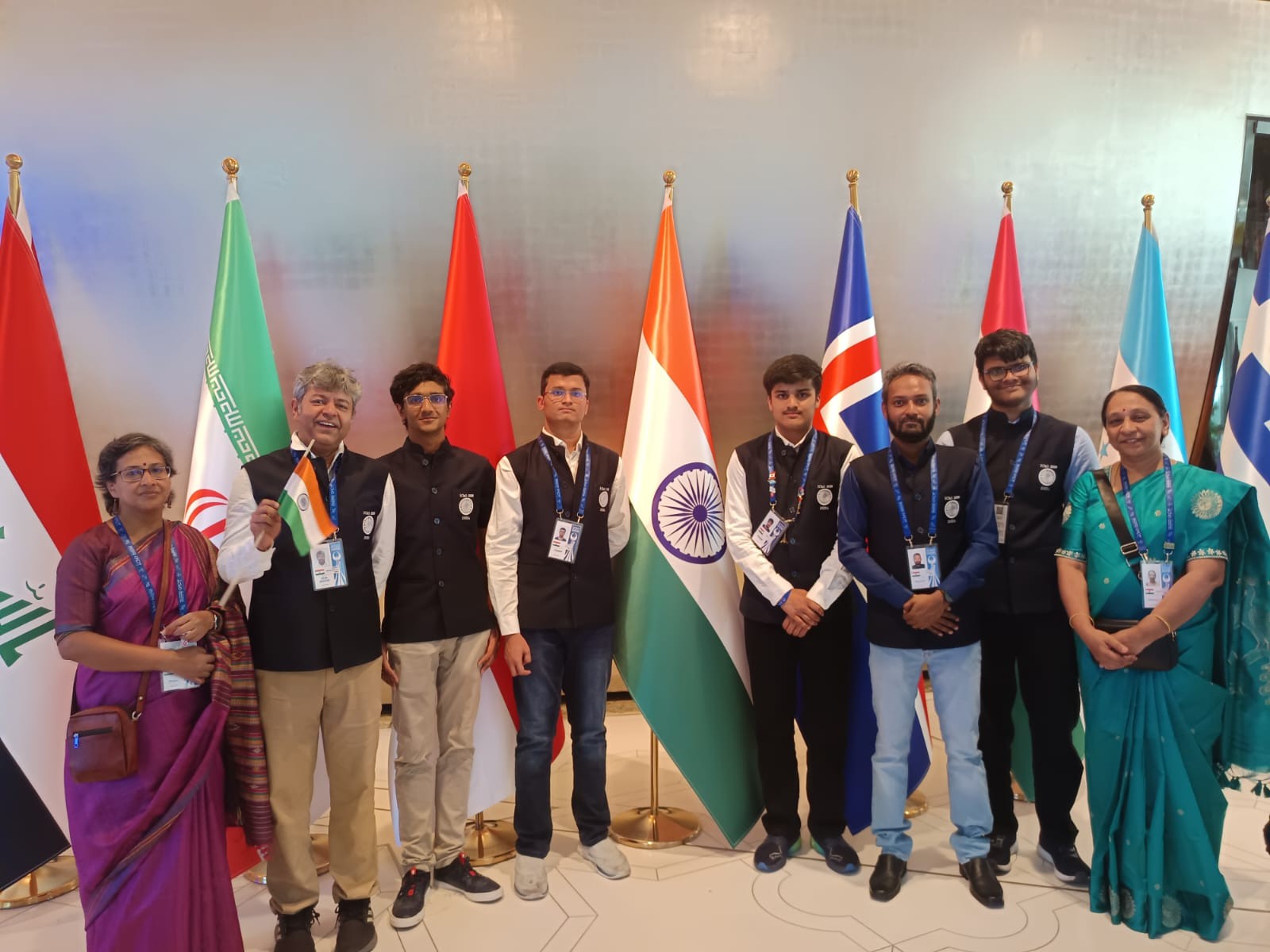
India performed very well at the 58th International Chemistry Olympiad (IChO) 2026 held in Tashkent, Uzbekistan from 10 to 19 July 2026, with all four students bagging gold medals!
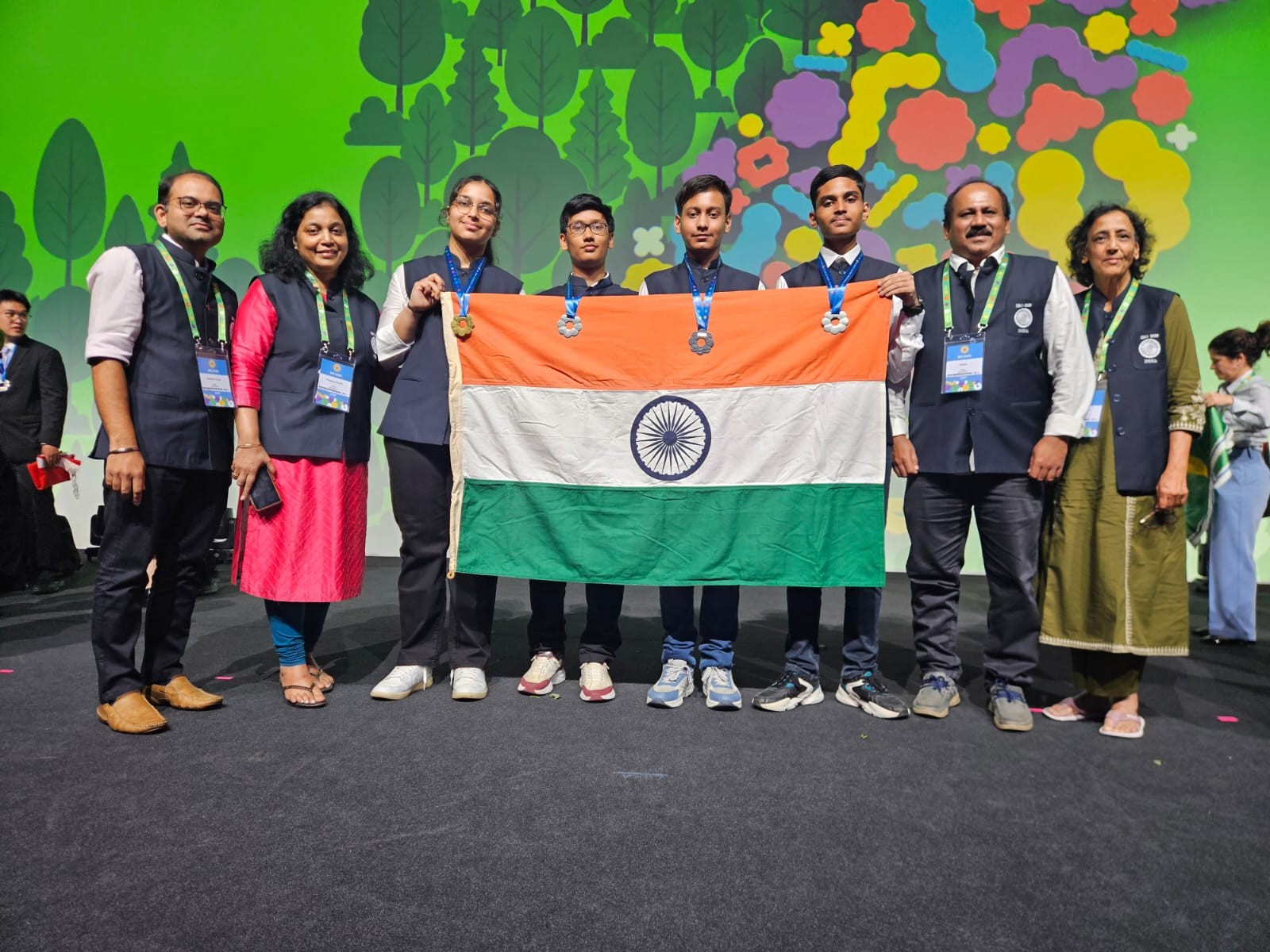
Indian Team won 1 Gold and 3 Silver Medals at the 37th International Biology Olympiad 2026 in Vilnius, Lithuania
India performed exceptionally well at the 37th International Biology Olympiad (IBO) 2026 held in Vilnius, Lithuania from 12 July to 19 July 2026, with all 4 students winning medals – 1 Gold and 3 Silver.
All four students bagging gold medals! at the 58th International Chemistry Olympiad (IChO) 2026 were:
Debadatta Priyadarshi (GOLD) from Bhubaneshwar, Odisha
Harshit Singla (GOLD) from Mandi Gobindgarh, Punjab
Kabeer Chillar (GOLD) from Delhi
Sandeep Kuchi GOLD) from Hyderabad, Telangana
There were four Jury Members from India: Prof. Subhajit Bandyopadhyay as Head Mentor, Dr. Indrani Sen (HBCSE, Mumbai) as Mentor, Dr. Anubendu Adhikary (IIT Kharagpur) and Dr. Jayasree Gopalakrishnan (NES Ratnam College of Arts, Science and Commerce, Mumbai) as Scientific Observers.
In the country-wise medals tally, India was placed at the first position, jointly with China, Vietnam, and Individual Participants Group B (from Russia). This year's IChO had 363 students from 93 countries, making it the biggest IChO till date. This is India's best performance in IChO with the first-ever all-gold haul!
The competition had both experimental and theoretical components.
The theoretical exam had 9 problems on identifying composition of a blue solution made from plant extracts and a yellow stone from a coal deposit (apparently also found in Avicenna's lab); kinetics of oscillatory BZ reaction; making porous framework materials (called COFs) using different functionalized organic compounds; estimating the mass of Uranium used in historic 1966 detonation to put off the natural gas fire in Urtabulak (after a blaze of 3 years); decoding structure of a chiral cardiolipin (a kind of phosphoester, part of intracellular membranes) having four identical fatty acid residues; using novel carbon allotropes —cyclocarbons— to form nanosized molecular belt by stabilizing it with a macrocyclic metal complex; nitrogen fixation in ammonia production plants using transition metal catalysts; catalytic reduction of atmospheric CO2 along with use of photosensitizers for enhanced efficiency; and reactions of synthetic analogues of cyclodextrins, testing students on stereochemical and regio-specific transformations.
The experimental exam consisted of 3 problems involving (i) synthesis of a metal complex using given (unknown reagents) and analysis of its composition by qualitative analysis and complexometric titration; (ii) identifying 20 given mixtures of biochemicals (such as glucose, urea, uric acid, cholestrol's ester and a oil) by using given 5 enzyme mixtures through microscale tests; and (iii) identifying compositions of 3 acid mixtures through pH-metric titrations followed by analysis of two indicator solutions (one natural indicator from red cabbage and another mixture of two indicators) through pH-metry.
We congratulate the students and the rest of the delegation for their excellent performance! The Chemistry Olympiad cell of HBCSE and the resource pool of external teachers and mentors deserve appreciation for preparing the team well during the orientation and pre-departure camps held at HBCSE.
This was the 27th appearance of India at the IChO. In all these years, 32% of our students have got gold medals, 51% silver, and 17% bronze. In the last ten appearances, the percentages of gold and silver medals have been 43% and 53%, respectively.
We thank the National Steering Committee on Science Olympiads, teacher organisations and the funding agencies of the Govt. of India (DAE, DST and MoE) for their continued strong support of the Olympiad programme which enables us to showcase Indian talent on the international arena.
The medallists at the 37th International Biology Olympiad (IBO) 2026 were:
Bhavyaa Gunwal (GOLD) from Mahendragarh, Haryana
Soumil Maity (SILVER) from Howrah, West Bengal
Nishit Kalani (SILVER) from Pali, Rajasthan
Anmol Kumar (SILVER) from Mansa, Punjab
The team was accompanied by two leaders: Prof. Rekha Vartak (Retd. HBCSE-TIFR, Mumbai) and Dr. Anupama Ronad (HBCSE-TIFR), and two Scientific Observers: Dr. Ranjithsinh Devkar (M. S. University, Baroda) and Dr. Siddhesh Ghag (UM-DAE Centre of Excellence in Basic Sciences, Mumabi).
There were 307 students from 78 countries in this year's IBO. In all 31 gold, 61 silver, and 91 bronze medals were awarded.
The IBO 2026 examinations pushed the boundaries of secondary school biology through grueling exams expertly designed by the Vilnius University Life Sciences Centre. The practical examinations, lasting six hours in total, required students to tackle complex, hands-on experimental tasks across four highly specialized domains. In the Molecular Biology & Biochemistry lab, students performed restriction digestion and agarose gel analysis of plasmids alongside a biochemical enzyme assay. The Animal Physiology lab had them evaluate the pharmacokinetics of aspirin and quantify breakdown of the product in simulated blood samples using an in-house developed app and light box colorimeter. The Animal Morphology & Systematics lab required competitors to analyze the systematics of insect specimens for classification, which included precise mouth-part dissections. Finally, the Plant Computational Biology lab introduced cutting-edge digital analysis, tasking students with utilizing ImageJ software to evaluate plant root lengths, perform high-dimensionality macrophenotype analysis of distinct plant ecotypes, and conduct complex transcriptome analysis.
Complementing the practical section was an equally intense six-hour theoretical examination divided into two separate three-hour sessions. The theory portion featured 100 highly challenging test items that relied heavily on real-world research data and field study analysis. Rather than testing simple recall, these questions evaluated advanced problem-solving skills across the core biological sciences, including Cell & Molecular Biology, Plant & Animal Sciences, Genetics & Evolution, Ecology, Ethology, and Biosystematics.
We congratulate all the Indian students, and the rest of the Indian delegation for this excellent performance. The teachers and mentors from across the country and the Biology Olympiad cell of HBCSE deserve appreciation for training the students during the orientation and pre-departure camps at HBCSE. We thank the National Steering Committee, all the teacher organisations and the funding agencies of the Govt. of India for their continued strong support of the Olympiad programme.
This was India's 26th appearance at the IBO. Of the 104 students so far, 17 have received gold medals, 69 silver, 17 bronze, and 1 honourable mentions. In the last ten years, the gold and silver strike rates have been 25% and 68%, respectively.
