Deliberations focused on opportunities and challenges in scaling sustainable finance, strengthening the role of financial institutions in supporting India’s transition and fostering greater collaboration among stakeholders.
FinTech BizNews Service
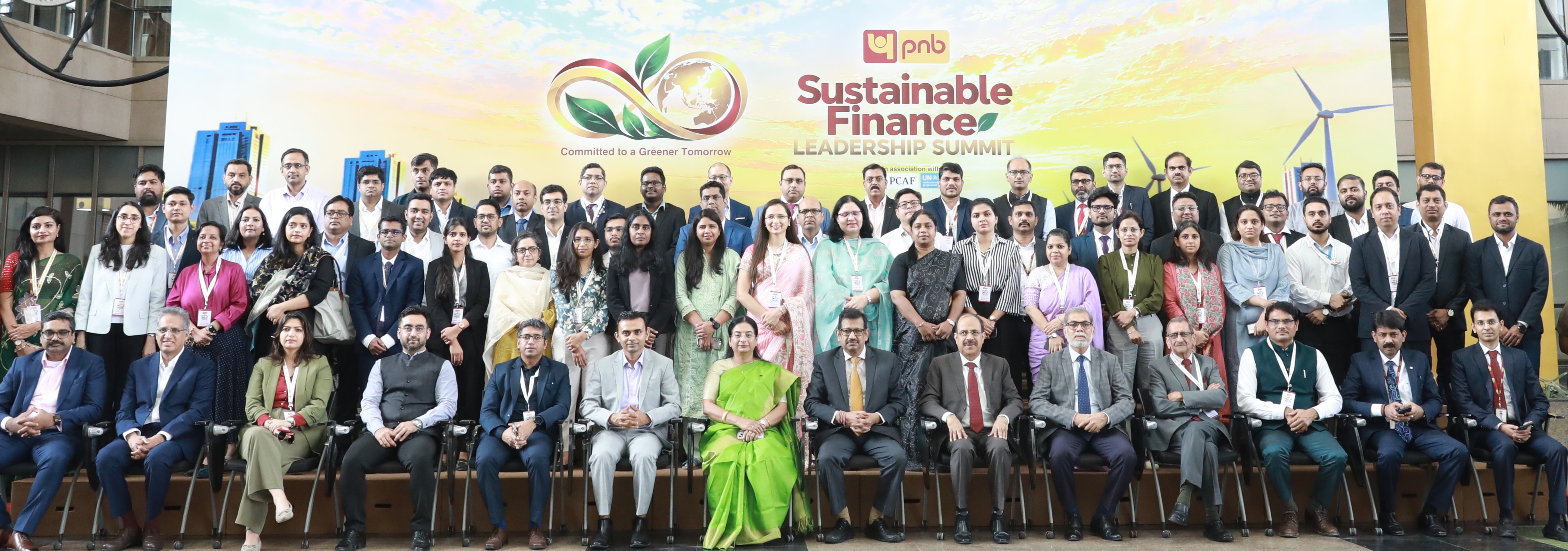
Mumbai, 09 October, 2026: Punjab National Bank (PNB), one of India’s leading public sector banks, hosted the inaugural Sustainable Finance Leadership Summit 2026, alongside the 3rd PCAF India Accelerator Session, at its Corporate Office in Dwarka, New Delhi. The Summit brought together senior representatives from regulatory bodies, banks, development finance institutions, corporates and sustainability organisations to deliberate on the critical role of finance in advancing India’s transition towards a sustainable and resilient economy.
The Summit marked a significant milestone in PNB’s sustainability journey, providing a collaborative platform for exchanging insights, sharing best practices and exploring actionable approaches to sustainable finance. Discussions centred on climate risk, responsible banking, financed emissions, nature-related risks and the integration of sustainability considerations into financial decision-making.
The event witnessed participation from senior representatives of the Reserve Bank of India (RBI), United Nations Environment Programme Finance Initiative (UNEP FI), Partnership for Carbon Accounting Financials (PCAF), SIDBI, NaBFID, EXIM Bank, IFCI, IIFCL, public and private sector banks, corporates and other key stakeholders from the financial and sustainability ecosystem.
The inaugural session featured an address by Ms. Mousumi Majumdar, GCRO, PNB, who also presented PNB’s sustainability journey and future roadmap. Dr. Balakrishna Pisupati, Country Head – India, United Nations Environment Programme, shared insights on sustainable finance, while Shri Saket Kumar, DGM and Head, Sustainable Finance Group, Reserve Bank of India, delivered a special address on “Climate Risk and Sustainable Finance – Regulatory View.”
A key highlight of the Summit was a leadership panel discussion on “What’s Next for Sustainable Finance in India?” The panel brought together diverse perspectives from banking, development finance, industry, renewable energy and sustainability. Deliberations focused on opportunities and challenges in scaling sustainable finance, strengthening the role of financial institutions in supporting India’s transition and fostering greater collaboration among stakeholders.
The Summit also featured expert-led knowledge sessions by UNEP FI, Crédit Agricole Corporate & Investment Bank, Golomt Bank, Climate Risk Horizon, Step Change and EY. These sessions covered a broad spectrum of emerging priorities, including the Principles for Responsible Banking, nature-related risks, India’s sustainable finance landscape, financed emissions and financing India’s transition to a sustainable economy.
An important component of the event was the 3rd PCAF India Accelerator Session, aimed at strengthening the technical and institutional capabilities of financial institutions in measuring and disclosing emissions associated with their financing activities. The session covered PCAF’s global journey and acceleration efforts in India, technical methodologies, practical examples and an interactive workshop to enhance participants’ understanding of financed emissions accounting and its application in the Indian financial context.
Underscoring the importance of translating sustainability commitments into measurable action, the event also included an assessment of its carbon footprint, highlighting the role of emissions measurement and accountability in advancing responsible sustainability practices.
The Summit concluded with remarks by Shri Pratap Keshari Mallick, GM, PNB.
Through the Sustainable Finance Leadership Summit 2026 and the PCAF India Accelerator Session, PNB reaffirmed its commitment to advancing sustainable finance through industry collaboration, knowledge sharing and institutional capacity building. The initiative reflects the Bank’s continued efforts to contribute to a more responsible, climate-resilient and sustainable financial ecosystem in India.
